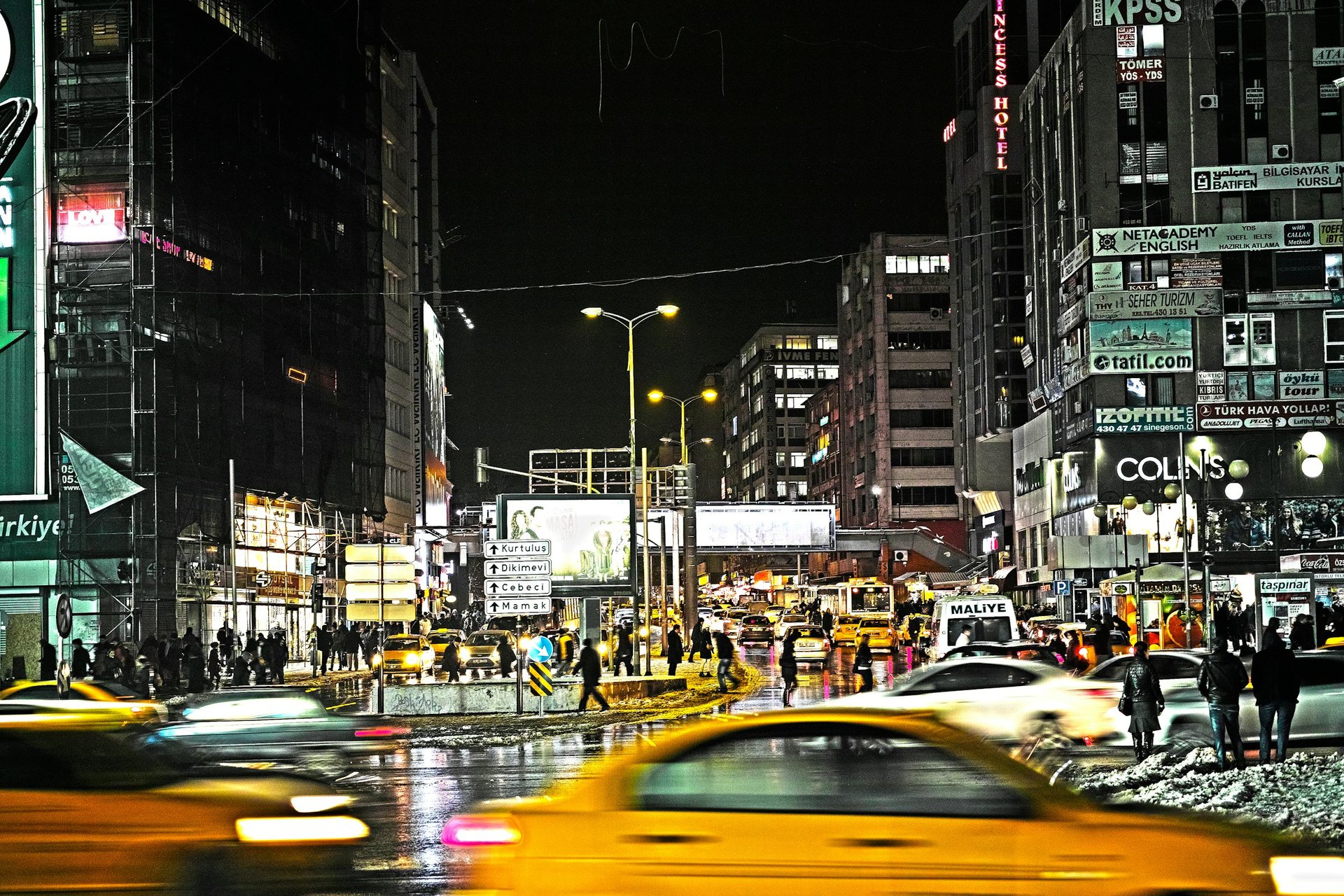
People Became Alike Because Architectural Projects Became Alike
“First we shape our buildings; afterwards they shape us.”
This saying has been circulating in the architecture world for years. It is often found romantic. Yet today environmental psychology, neuroarchitecture and urban research tell us that it is more than a pretty metaphor. The spaces we live in affect how we walk, how we meet, how social we are, how stressed we get, and even how we perceive the world.
Different geographies, different cultures. But the same glass towers, the same residence lobbies, the same open kitchens, the same shopping centres, the same chain cafés, the same office floors.
There was a time when cities did not resemble one another. Today most new buildings look less as if they belong to where they stand and more as if they were chosen from a global catalogue.
Urban theorist and anthropologist Marc Augé explains this with the concept of the “non-place”. According to him, airports, shopping centres, chain hotels and increasingly large parts of cities have begun to lose their history, identity and sense of belonging. As a result, “every place resembles every other place.”
I think the problem is not only architectural aesthetics.
The problem is that these spaces have begun to produce the same way of life. Because every space invisibly suggests a behaviour to us: high walls teach us not to see one another, gated communities teach us not to relate to strangers, huge car parks teach us not to walk, buildings cut off from nature make us forget the seasons. And uniform housing plans produce uniform daily habits.
This is exactly why the Danish urban planner Jan Gehl, after more than fifty years of research, said that architecture should in fact design not so much buildings as “life between buildings.” Gehl's most important discovery was this: when cities are first designed for cars, people withdraw from public life; but when streets are rearranged for people again, the city becomes livelier, safer, healthier and more liveable. This is not merely an opinion — it is a design approach developed from years of observation.
Today it is not only urban planners but also neuroscientists who study this relationship. A comprehensive systematic review published in 2025 shows that the built environment measurably affects people's emotions, stress levels, attention and behaviour. Heart rhythm, eye movements, EEG and other biometric data can now objectively examine the effect of architecture on people. In other words, we no longer just say that “space seems to affect us”; we can measure it.
Of course, an important distinction needs to be made here.
Architecture does not determine human character on its own. As Richard Buday also emphasises, human behaviour is the shared product of many variables such as family, culture, biology and social environment. But architecture can make these behaviours easier, harder or guide them. A well-designed building does not create better people on its own; but it can prepare the ground on which good behaviours can emerge.
My real concern begins right here. Today we are making our cities increasingly alike. Then we wonder why people sit in the same cafés, live the same lives, think the same way and consume the same experiences.
Perhaps the problem is not with people. Perhaps the problem lies in the spatial scenarios they are made to live through again and again every day. In other words, space is not merely a backdrop; it is an active producer of social life.
That is why architecture's new question should now be: not “How do we design a more iconic building?” but “How do we design spaces in which people can live differently, according to their own character and culture?” Because the identity of cities lies not only in their façades, but in the ways of life they produce.
Perhaps today the sentence at the beginning of this essay should be corrected like this: what makes people alike is not architecture itself; it is the similar ways of life that architecture produces over time.
References
Augé, M. (1995). Non-Places: Introduction to an Anthropology of Supermodernity. Verso.
Alexander, C., Ishikawa, S., & Silverstein, M. (1977). A Pattern Language. Oxford University Press.
Buday, R. (2020). Do Buildings Really Shape Human Behavior? Common Edge. A critical assessment discussing how human behaviour is shaped by the interaction of architecture, the social environment and individual factors.
Gehl, J. (1971/2011). Life Between Buildings. Island Press.
Gehl, J. (2010). Cities for People. Island Press.
Interview on Gehl and the effects of his work on urban life: Jan Gehl – Urban Visionary.
Hillier, B., & Hanson, J. (1984). The Social Logic of Space. Cambridge University Press.
Karimi, K. (2018). Space Syntax: Consolidation and Transformation of an Urban Research Field. Journal of Urban Design. An important review summarising the effects of spatial organisation on movement, social interaction and urban life.
Li, Z., Lee, J. H., Yao, L., & Ostwald, M. J. (2025). Impact of Built Environments on Human Perception: A Systematic Review of Physiological Measures and Machine Learning. Journal of Building Engineering. A current systematic review examining the effects of the built environment on human perception, stress, attention and emotions using neurophysiological data.
Pallasmaa, J. (2005). The Eyes of the Skin: Architecture and the Senses. Wiley.
Anderson, D. (2020). Why Every City Feels the Same Now. The Atlantic. An important commentary discussing the effect of globalisation on urban identity and the feeling of “placelessness”.