In Ankara, It Is Not Traffic but the City Model That Is Gridlocked
The problem is not how to move people through the city faster.
The real question is why we have to make so many trips in the first place.
It already feels like we are late leaving the house. A laptop bag on one side, the child's lunch on the other; the day's first meeting in mind, the school drop-off time, and messages still unanswered.
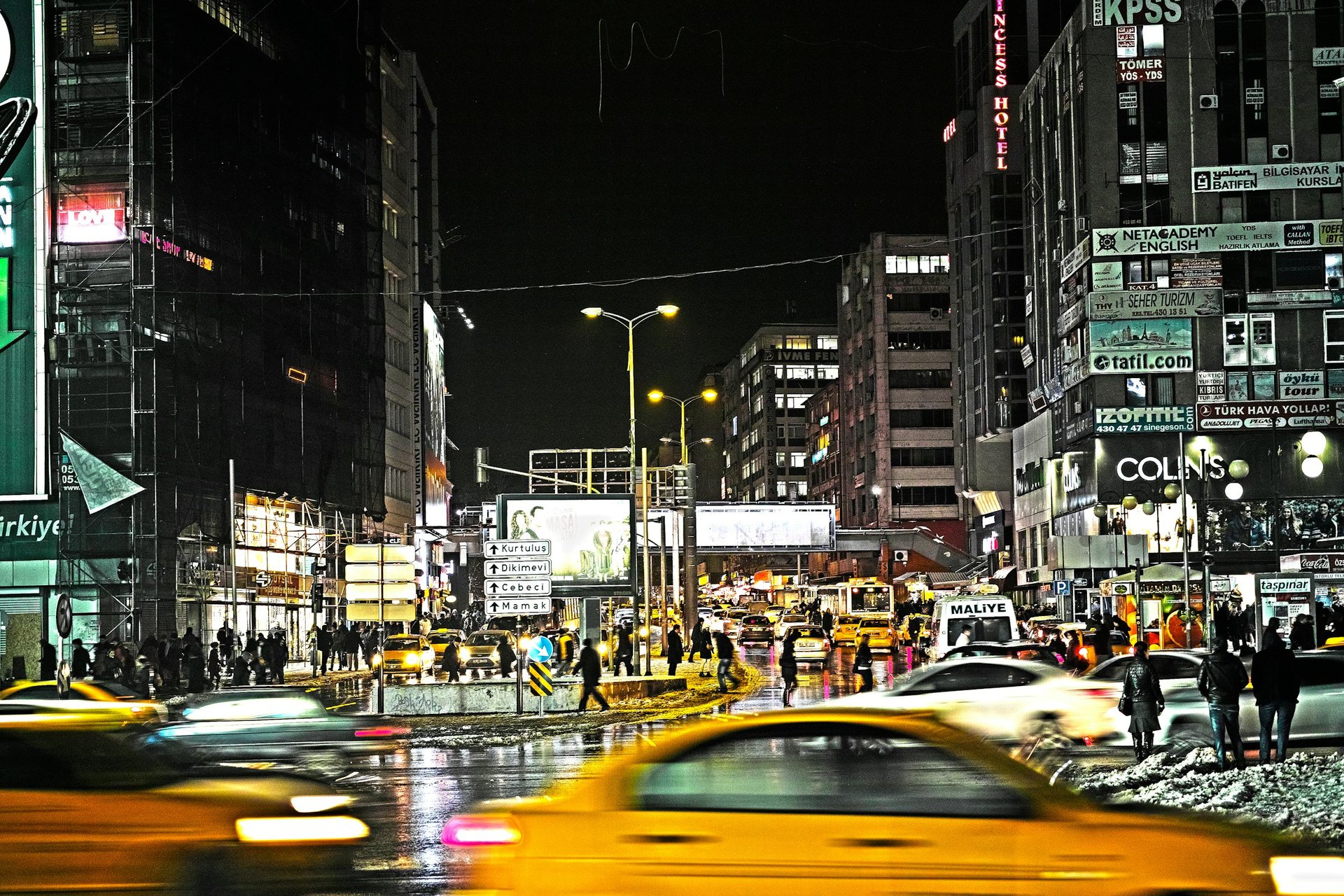
The school is normally twenty minutes away. But traffic has stopped at the intersection. The child is dropped off, and now the rush to get to the office begins.
We sit down at the desk a few minutes late. Before the day has even started, there is a feeling of being behind.
In the evening the same roads are travelled again in the opposite direction. First school or a course, then the market, then home.
When we get home we feel we have done a great deal all day. Yet a large part of our time was spent only trying to get from one place to another.
We usually accept this as the natural consequence of living in a big city.
Perhaps not.
Because the city is not only the place where our lives happen. How we arrange our home, work, school, shopping, care and social life in relation to one another also sets the rhythm of our day.
Does the city give us time, or take time from us?
Ankara is growing.
According to TurkStat's 2024 Address-Based Population Registration System data, Ankara's population rose by 60,567 people over the previous year, reaching 5 million 864 thousand 49.
But there is a more important issue than population growth: as the city grows, the parts of life are moving apart from one another.
Housing in one place, work in another, school elsewhere, social life somewhere else.
In such a city, while trying to make movement easier, we also keep producing a need to move again and again.
That is why we need to change the question.
How can we move people from one place to another faster?
instead of:
Why do people have to make so many trips?
When we start asking this, the solutions we imagine for the city change too. One of design's strongest transport strategies is not to keep accelerating movement, but to reduce the need for unnecessary movement.
“Real freedom is not only being able to go anywhere, but not having to keep going somewhere.”
Traffic is not only a transport problem
This is also the important point made by TEPAV's 2025 study Where Did This Traffic Come From in Ankara?: Ankara's traffic problem cannot be explained by road capacity alone.
Migration, spatial sprawl, the imbalance between jobs and housing and a car-dependent model of urbanisation are parts of the same system.
Studies by Gazi University on Ankara's transport policies also point out that daily travel distances have grown as the city expands, especially along its western corridor.
In fact, what we see in traffic today is the physical, everyday consequence of urban planning decisions.
And we do not pay the price in fuel alone.
The time spent on the road is taken away from work, family, rest, sport, social life and sometimes from the time in which we could simply do nothing.
Seen this way, traffic stops being merely a transport problem.
It becomes a quality-of-life problem.
What if the solution is not more roads?
When traffic increases in cities, our first reflex is usually to build more roads, wider intersections and stronger transport infrastructure.
Of course we need transport infrastructure.
But if we only try to help people get from one place to another faster, we miss the real question:
Why, from the moment we leave home, do we have to go somewhere else for almost every need?
This is where my interest in mixed-use projects begins.
Mixed use does not mean many functions on the same plot
When we say mixed use, we often think of housing, offices, a shopping centre and a hotel within the same project.
But that alone is not enough.
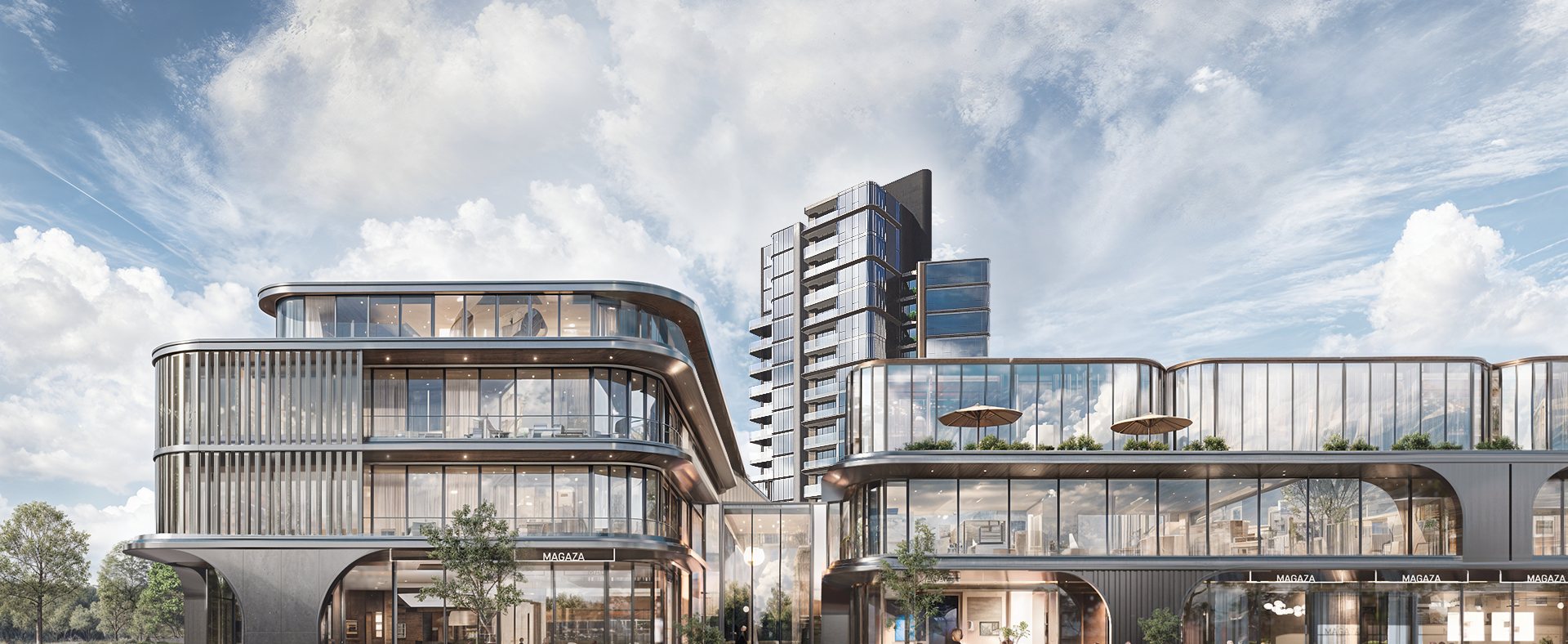
You can raise residential and office towers on a podium, put a shopping centre below and a hotel beside it. But if residents take the lift straight down to the car park, workers enter through another security gate, and shoppers leave their cars in the covered car park and never step onto the street, everyone may be in the same place, yet life is still separate.
Real mixed use is less about placing different functions side by side and more about building relationships between them.
Between home and workplace.
Between work and everyday needs.
Between building and street.
Between private life and public life.
And above all, between people and their time.
Not faster travel, but less forced travel
In an environment where we can walk to work, the market, a restaurant, a park, sport or everyday services, we do not make some journeys faster.
We do not make them at all.
The difference matters.
When housing, education, work, care, commerce and public space come closer together, part of the demand for travel can disappear altogether instead of being shifted to another mode.
A child can walk to school.
An older person can reach their daily needs without depending on anyone else.
Some days an employee can use a workspace nearby instead of going to the head office at the other end of the city.
A parent may not have to shuttle by car all day between school, the market and other daily needs.
The time spent on the road returns to life:
To a meal eaten together.
To rest.
To play.
To walking.
To making things.
To conversation.
Or to simply stopping, doing nothing.
How does this happen in a project?
This situation is also one of the basic subjects of the projects we are working on at Aura Design Studio.
Housing, work and commerce sit in the same urban focus.
But for us the real issue is not how many metres apart they are on the plan.
How should a person get from their home to their workplace or to a daily need?
Can they do this by passing through open spaces, squares and uninterrupted pedestrian routes?
Because proximity is created not by colours sitting next to each other on a plan, but by connections that can actually be used in everyday life.
That is why, in a good mixed-use project, the spaces between buildings are at least as important as the buildings themselves.
Street, courtyard, square, garden, eave and threshold are not just leftover areas between buildings; they are the places where different lives can touch.
15 minutes is not a formula.
The real issue is not distance but reducing everyday dependency.
15 minutes is not a target, it is a question
This approach also intersects with the 15-Minute City model discussed around the world in recent years.
In cities like Paris, the main aim is to make a large part of everyday needs reachable on foot or by bicycle.
But I think the real issue here is not the number “15 minutes”.
Because the same distance does not mean the same thing to a child, a healthy adult, an older person or someone using a wheelchair.
The more important question is this:
How much do we have to move to sustain our everyday lives, and how independently can we do it?
Proximity does not mean confining people to small neighbourhoods. Universities, hospitals, cultural institutions and specialised workplaces will continue to exist at the scale of the city.
The point is not needing a car even to buy a litre of milk, drop a child at school or walk in a park.
The future of a city is sometimes decided by small distances
To change cities we do not always need big master plans.
A nearby school.
A safe footpath.
A care service in the right place.
A lively ground floor.
A bench to sit on in the shade.
An uninterrupted pedestrian route connected to public transport.
These are not showy architectural decisions.
But because they can reduce the burden of everyday life, they can sometimes change a city's future more than large buildings do.
Today's greatest luxury: time
We cannot solve Ankara's traffic problem simply by building more roads.
Because the issue is not just the number of cars on the roads.
The issue is that the city model we have built forces us to keep going out on those roads.
If we can bring housing, work, education, commerce, care, culture and public life closer together again, we do more than reduce the traffic load.
We give people their time back.
The good city of the future will not be the one where we reach everywhere faster.
It will be the city in which we do not have to keep rushing somewhere in order to live a good life.
And perhaps, when we evaluate our cities, we now need to use a different measure:
The greatest luxury today is no longer square metres, it is time.